
Cover of Leaving Microsoft

English edition ·

// l0g investigation · digital sovereignty

Leaving Microsoft

The freedom to choose

From the first contract to the next change of team, seven investigations follow public bodies’ technology dependencies. Licences, applications, costs, migrations and responsibilities explain how freedom of choice is built and maintained.

7
complete articles
15
infographics
EPUB 3
offline reading

Lire en français

A turquoise path connects a public building to a workspace through glass layers containing servers and documents. Conceptual artwork.
A freedom to maintain: conceptual artwork, without depicting an actual installation. The chapters document contracts, workflows and migration experiences.

01 / introduction

A public service must survive a change of hands

A member of staff opens a case, checks a document and sends a decision. To the person waiting for an answer, the software behind that work is usually a secondary concern. For the public body, keeping the task possible as its technology changes is a lasting responsibility. This investigation starts with ordinary administrative work and follows a political question: how can an institution choose its tools and pass the means of making that choice to the people who come after it?

Microsoft provides the thread connecting the chapters. The records examined reveal relationships between office software, email, accounts, applications and hosting. Chapter one follows a roads agency application in Schleswig-Holstein that still calls Excel during a move to another office suite. That small connection takes the investigation behind the desktop. A digital case depends on its contents, the people permitted to access it and the operations they need to perform.

An original introduction opens the book and connects the seven investigations.

02 / reading journey

Seven chapters on freedom to choose

The complete seven-part investigation, in reading order. Each article remains available online with its references and limitations.

  1. Conceptual illustration for chapter 1 : Public service dependencies
    01

    Public service dependencies

    Applications, accounts, permissions and records: tracing the connections needed for continuity.

  2. Conceptual illustration for chapter 2 : One contract shapes the next
    02

    One contract shapes the next

    Procurement, standardisation and access rules establish the conditions for future choices.

  3. Conceptual illustration for chapter 3 : Licences shape cloud choices
    03

    Licences shape cloud choices

    Microsoft’s server software licences influence the choice of hosting provider.
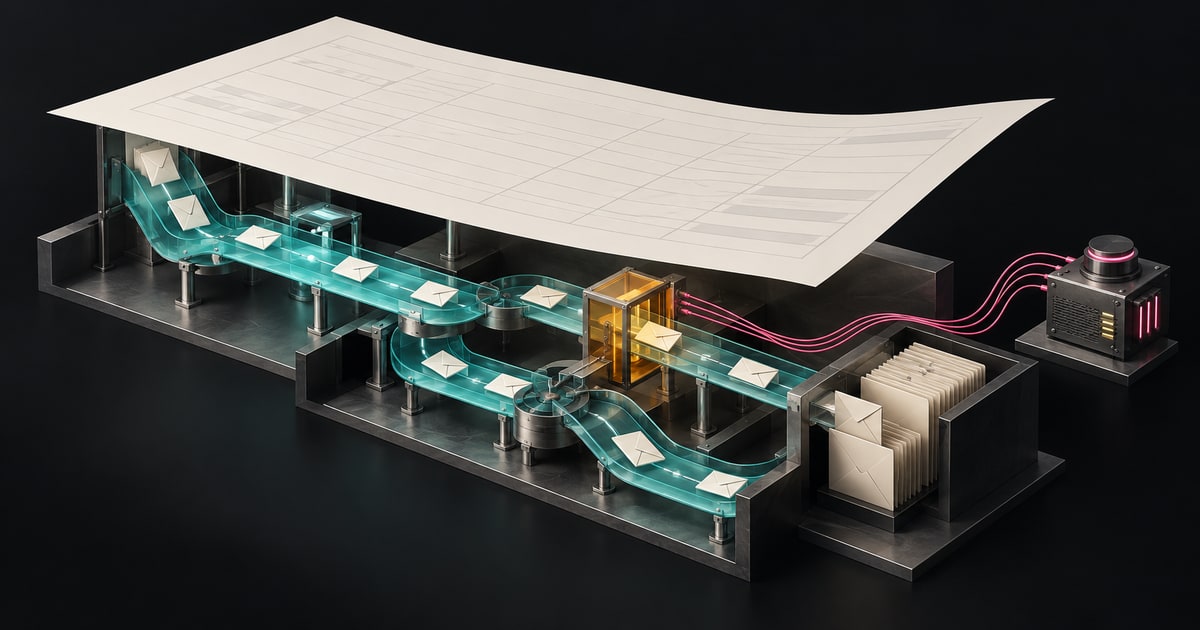
  4. Conceptual illustration for chapter 4 : Workflows choose the software
    04

    Workflows choose the software

    Budget templates and email processing connect administrative rules to applications.

  5. Conceptual illustration for chapter 5 : Funding the transition years
    05

    Funding the transition years

    Avoided expenditure, parallel operation, training and maintenance retain their distinct scopes.

  6. Conceptual illustration for chapter 6 : Making a migration last
    06

    Making a migration last

    Release testing, user support and contributions sustain the new service over time.

  7. Conceptual illustration for chapter 7 : Keeping the freedom to choose
    07

    Keeping the freedom to choose

    Dependency assessment, contracts and exit exercises preserve the next team’s options.

03 / inside the book

Licence assignment and procurement criteria

Two of the fifteen infographics included in the edition. They explain the mechanisms examined in the book, preserving their scope and sources.

Assigning licences through Entra

A group policy grants service accessEducational Entra mechanism: an account belonging to a group inherits the product licence assigned to that group. The administrator can enable or disable the product’s service plans. Joining the group triggers assignment; leaving removes this assignment. Other groups or direct assignments can retain the same licence. This diagram concerns access rights; software installation is a separate step.l0g / FROM ACCOUNT TO ACCESSA group policy grants service accessEntra assigns the licences. The administrator chooses the service plans.UseraccountGroupAssignment policyProduct licenceFrom the groupAdministrator-selected plansEnabled planAccess grantedDisabled planService excludedJoin the group:its licence is assigned to the account.Leave the group:this assignment is removed.Teaching example: assigning access rights. Software installation is a separate step.Other groups or direct assignments can retain the same licence.Sources: Microsoft Learn, group-based licensing, accessed 8 October 2026.
A group policy grants service accessEducational Entra mechanism: an account belonging to a group inherits the product licence assigned to that group. The administrator can enable or disable the product’s service plans. Joining the group triggers assignment; leaving removes this assignment. Other groups or direct assignments can retain the same licence. This diagram concerns access rights; software installation is a separate step.l0g / FROM ACCOUNT TO ACCESSA group policygrants service accessEntra assigns the licences.The administrator chooses the service plans.UseraccountGroupAssignment policyProduct licenceFrom the groupAdministratorchoiceEnabled planAccess grantedDisabled planService excludedJoin the group:its licence is assigned to the account.Leave the group:this assignment is removed.Teaching example: assigning access rights.Software installation is a separate step.Other groups or direct assignmentscan retain the same licence.Sources: Microsoft Learn, group-basedlicensing, accessed 8 October 2026.
Chapter 2. A group rule can assign licences; the service plans selected by the administrator determine which services are available. The chapter explains the conditions and cites Microsoft’s documentation.
Read the chapter and its sources

The threshold and score of a sovereign cloud offering

A threshold, then a weighted scoreEuropean Commission cloud procurement. All eight objectives must reach at least SEAL 2. Failure on any objective leads to rejection. The overall SEAL is the minimum of the eight levels, not their average. Offers meeting the threshold can then be compared through their sovereignty score: each objective score is divided by its maximum and weighted at 15, 10, 10, 15, 20, 15, 10 and 5 percent. The result contributes to the quality score. No candidate scores or weight within the overall tender score are represented.l0g / CLOUD PROCUREMENTA threshold, then a weighted scoreEuropean Commission procurement · 2025 framework · 2026 implementation guide8 OBJECTIVES ASSESSED1 · Strategy2 · Law and jurisdiction3 · Data and AI4 · Operations5 · Supply chain6 · Technology7 · Security and compliance8 · EnvironmentTENDER THRESHOLDSEAL 2Minimum requiredfor every objectiveTHRESHOLD METThe offer can proceedto score comparisonAny objective below the threshold:offer rejectedWeights of objectives 1 to 8 · total 100%15%110%210%315%420%515%610%75%8Contributesto thequality scoreSource: European Commission · Each objective score is divided by its maximum, then weighted.
A threshold, then a weighted scoreEuropean Commission cloud procurement. All eight objectives must reach at least SEAL 2. Failure on any objective leads to rejection. The overall SEAL is the minimum of the eight levels, not their average. Offers meeting the threshold can then be compared through their sovereignty score: each objective score is divided by its maximum and weighted at 15, 10, 10, 15, 20, 15, 10 and 5 percent. The result contributes to the quality score. No candidate scores or weight within the overall tender score are represented.l0g / CLOUD PROCUREMENTA threshold, thena weighted scoreEuropean Commission procurement2025 framework · 2026 implementation guide8 OBJECTIVES ASSESSED1 · Strategy2 · Law and jurisdiction3 · Data and AI4 · Operations5 · Supply chain6 · Technology7 · Security and compliance8 · EnvironmentTENDER THRESHOLDSEAL 2Minimum required for every objectiveThreshold metScore comparedAny objectivebelow threshold:offer rejectedWeights of objectives 1 to 8Total: 100%Objective 1 · 15%Objective 2 · 10%Objective 3 · 10%Objective 4 · 15%Objective 5 · 20%Objective 6 · 15%Objective 7 · 10%Objective 8 · 5%The sovereignty score contributesto the tender’s quality score.Source: European Commission.Each score is divided by its maximum,then weighted.No candidate scores are shown.
Chapter 7. The European Commission’s October 2025 framework and June 2026 guidance give the minimum SEAL level and weighted score different roles. The weights describe the method; no bid scores are reconstructed.
Read the chapter and its sources

04 / conclusion

Passing on the ability to decide

Across these chapters, an exit becomes a succession of responsibilities. Someone must identify an application’s dependencies, check the available rights, fund parallel operation and help staff facing difficulties. Another team will eventually inherit that work. Freedom of choice therefore has an institutional dimension: the knowledge, records and resources needed to exercise it must remain usable through changes of personnel. The handover matters as much as the initial decision.

The opening chapters show how early that responsibility begins. One procurement helps establish the environment for the next. A licence assignment rule shapes access for new users. A procedure built around a workbook or an email service can extend the dependency to other teams. Preserving options requires the public body to explain those choices and retrieve the materials needed to change them. That knowledge also supports an informed decision to retain an integration whose benefits justify its constraints.

The full conclusion connects architecture, contracts and the continuing work of the teams who run the service.

05 / keep the investigation

A sourced edition for offline reading

This edition, dated 9 October 2026, brings together all seven articles with an original introduction and conclusion. Its documentary cutoff is 9 October 2026.

Text reflows to fit the screen. The contents, internal references and infographics are available offline. External documents and online articles require a connection. Image enlargement depends on the reading app.

The covers and panorama are conceptual illustrations created with AI assistance. The infographics retain the articles’ dates, units, sources and limitations.

Free, without registration, embedded scripts or tracking. Creative Commons Attribution 4.0 International.

Check the file’s integrity

SHA-256

1e52f75cc8b6eef1a7c8a949ce684d041c0d2c218e0cf00f6bee81708d026df6
Download the book EPUB 3 · 1.5 MB