// analysis
Jupiter: following AI’s creditors
Open the documentsThe source documents
The documents cited in the analysis and, where identified, their associated passages. An automatically detected association is not a verified claim.
- Exhibit 21.1: subsidiaries at 31 December 2025 ↗Source date not identified
- OFlex semiannual report, Form N-CSRS ↗Source date not identified
Sources and reading context
Topics
Contents7 sections
AI’s creditors · 1/6
An order issued on 6 November cancelled the 7 December hearing on the air permit for Jupiter’s power plant. New Mexico’s environment department must revise its recommendation before another hearing can be arranged. The application remains open: the order also rejected motions seeking its dismissal. S02
Ten days later, Bloomberg revealed a change among the project’s lenders. HSBC had sold roughly $300 million of claims on the campus intended for Oracle, part of an $18 billion construction loan. The reported price was in the mid-80s, expressed in cents per dollar of face value. The sale took place several weeks earlier; its precise date and the buyer’s identity remain unknown. S01
At Jupiter, the credit rests on infrastructure still being built. The campus needs permission to operate its power supply, while part of its debt has changed hands. The report establishes no link between the sale and the order. Contracts and financial statements offer a way to investigate the financial consequences of both developments.
HSBC’s exit price is a starting point. The investigation must find the holder of the claim, the revenues expected to repay it and the funding used to carry it. Following those connections takes the inquiry from a single transaction towards European banks’ exposure.
Power enters the financial contract
Jupiter is being built in Doña Ana County, southern New Mexico. Oracle identifies itself as the tenant in its letter supporting the permits on 2 March 2026. The project brings together several roles: the tenant orders capacity, property companies own the buildings and borrowers answer for their debts under the financing agreements. Their identities and guarantees determine lenders’ rights. S03
The power design has already changed. On 27 April, Oracle announced that Bloom Energy fuel cells would replace the previously planned gas turbines and diesel generators, with up to 2.45 GW of proposed installed capacity. That measures planned installed electrical capacity, a different metric from the campus’s computing capacity. On 15 October, Oracle and Yucca Growth Infrastructure proposed another change to operating conditions, subject to regulatory review. S04 S11
Building works and permission to operate the power supply follow separate procedures. November’s order concerns the air permit for the microgrid, the local power system planned for the campus. It is a procedural order, rather than a general construction shutdown. S02
For a lender, time still has a cost. If promised capacity arrives late, construction may last longer, expected revenues may shift and refinancing may become harder. The contract determines who bears the wait. This is how a physical constraint reaches a balance sheet: it changes the payments on which a loan depends.
Reuters reported an Oracle force majeure notice on 24 September. According to an informed source, Oracle cannot terminate the lease, remains responsible for debt costs, and would pay development-stage rent for longer before full rent begins. In that September report, Blue Owl said financial commitments were unchanged, while Oracle maintained its announced schedule. S05
Those provisions matter when assessing whether a permitting delay could become a payment default. Strong obligations may protect a lender while keeping the owner’s capital tied up for longer. We examined the gap between construction, contracts and cash in our investigation into financing Oracle’s buildout.
The price of an exit
A loan’s face value is a contractual reference amount. Its resale price is the amount a buyer will pay today for the rights being transferred. Maturity, interest rates, guarantees, market liquidity and uncertainty about future payments all help determine that price.
The price reported for HSBC’s sale represents a substantial discount to face value. The accounting outcome depends on the carrying value, provisions and sale terms. Estimating a probability of default would also require the payment schedule and expected recoveries. The report covers the tranche sold, leaving open whether HSBC retained any exposure. S01
The seller may free capacity for other lending. The buyer may consider the available return sufficient compensation for the wait and the risk. The same transaction can reduce one investor’s exposure while offering another an opportunity. Understanding those decisions requires information about their funding and constraints, beyond the quoted price.
Other portfolios are moving too. On 5 November, Reuters reported, citing Bloomberg, that ING was offering roughly $500 million of data-centre loans. The offer covered about a dozen loans across several projects, with bids due on 19 November. That sale process is distinct from the completed transaction reported for HSBC. S06
These moves make loan distribution worth following. A bank may arrange a large financing, retain a portion and later reduce that position. Adding up every financing it helped organise would misstate its current exposure. The relevant measure is the share retained, observed at a specified date. Similar care applies to loans already offered at a discount in September: indicative quotes and a later sale do not, by themselves, form a consistent price series.
Beneath Jupiter’s name, companies and funds
Searching for creditors under the campus’s commercial name quickly reaches its limits. Public records also use the names of the companies responsible for its separate parts.
The project’s annual report, dated 31 July 2026 and published by the county, identifies Red Chiles A through D for the data centres and Yucca Growth Infrastructure for the microgrid. This is a company submission, rather than an independent audit. A separate SEC filing lists the Red Chiles entities among Blue Owl Real Estate Net Lease Trust’s subsidiaries as of 31 December 2025. S07 S08
Those identities connect records that might otherwise appear unrelated. A special-purpose vehicle, or SPV, may own a building and borrow to construct it. The tenant pays rent under a lease; lenders have their own rights against the borrower. Each step calls for a precise question: which company owes money to which counterparty, and who guarantees the obligation?
The search then leads to a fund. At 30 June 2026, T. Rowe Price OHA Flexible Credit Income Fund reported roughly $5 million in face value across Red Chiles A through D. Its consolidated accounts also showed $61.65 million of borrowing through a vehicle with CIBC as administrative agent. Pledged investments carry a specific footnote, absent from the four Red Chiles rows. Portfolio borrowing and Jupiter holdings appear in the same accounts, but have different scopes. S09
Those accounts open a trail into the fund’s financing. Connecting the borrowing to Jupiter would require the relevant funding and collateral documents. The lender register would establish each institution’s share. CIBC is identified here as administrative agent, responsible for administering the credit agreement. HSBC’s buyer remains to be found.
This is the work needed to follow the links between banks and private credit. The assets show where a fund invests. Its liabilities help explain where its money comes from. Collateral and guarantees then determine how trouble at a project could reach its financiers.
Banks can appear at several levels
The mechanism is straightforward. A bank may lend to a project. A fund may buy a claim on that same project and borrow from a bank to finance its portfolio. If the project struggles, the direct loan and the loan to the fund could be affected through different channels. Their sensitivity depends on the fund’s equity, other assets and borrowing terms.
European supervisors are monitoring this overlap. In a contribution to Eurofi Magazine published on 24 March 2026, ECB Supervisory Board member Patrick Montagner explains that banks can lend both to funds and to companies in their portfolios. A 2024 review of banks’ links to private credit and private equity funds found gaps in the identification of parallel lending. Those findings extend beyond AI financing. S10
Credit insurance adds another contract. The lender retains a claim and acquires a conditional right to compensation. Assessing the remaining risk requires scrutiny of the insurer’s ability to pay, exclusions and coverage limits. This channel, discussed in our analysis of banks and reinsurers, needs to be investigated deal by deal. No policy covering the claim sold by HSBC was identified in the records reviewed.
The terminology can otherwise create an illusion of separation. Debt in a vehicle may sit outside a developer’s balance sheet while remaining an asset on a bank’s. Conversely, client assets managed by an investment subsidiary do not automatically become the banking group’s own exposure. Every use of “off balance sheet” needs the same clarification: off whose balance sheet?
A decisive footnote in Frankfurt
On 9 November, the ECB published a reference point: approximately €62 billion in AI-related lending in the second quarter of 2026, equivalent to 1.2% of euro-area banks’ total committed corporate exposures. Footnote 8 defines its coverage. S12
The estimate selects industries that also supply other goods and services. It excludes some data centres classified under real estate and indirect loans through special-purpose vehicles. The €62 billion is therefore a sector-based reference point whose coverage only partly overlaps with AI financing. An assessment of European banking groups would also require a population extending beyond the euro area. S12
A useful estimate will distinguish loans retained by banks from claims held by funds, insurers and other investors. Their financing links and guarantees should also be shown, revealing the connections without counting a project’s debt twice.
This approach must also allow for a reassuring outcome: limited losses, absorbed by investors able to bear them. The ECB describes euro-area banks as having robust capital and liquidity positions. S12 That supervisory assessment is the starting point for investigating exposures, protections and possible concentrations.
For now, Jupiter offers an initial documented trail. The permitting record shows how long infrastructure takes; Bloomberg’s account provides a price for a claim; company and fund disclosures identify some holders. The remaining task is to connect these records to retained commitments and enforceable protections. That is where a credible measure of European exposure will emerge, through the contracts and accounts of those financing the construction.
Sources
- HSBC sold $300 million troubled data-center loan at discount Bloomberg republication reviewed in The Star
Passages and scope
Paragraphs on the amount, price and relative timing. Bloomberg text reviewed in The Star, relying on anonymous sources. The sale agreement, buyer, carrying value and any remaining HSBC position are unknown. The republication is not independent confirmation.
- Order AQB 26-57(P) on the microgrid permit application Official docket of pending matters 13 November notice on the administrative record
Passages and scope
6 November order, page 1, paragraphs 1(a) to 1(c), then paragraphs 3 and 5: hearing cancellation, reconsideration of the recommendation and denial of motions to dismiss the application. Official docket accessed on 17 November; latest visible filing dated 13 November, an AQB notice of no supplemental administrative record. The order uses permit number 10883, while the index and notice of 13 November use 10833. This documentary discrepancy remains unexplained.
- Oracle letter to the New Mexico Environmental Improvement Board
Passages and scope
Page 1, opening paragraph: Oracle’s stated role as tenant. A project participant’s letter, not a bank guarantee agreement.
- Power design announced with Bloom Energy
Passages and scope
Opening two paragraphs: technology and proposed installed capacity. Forward-looking company announcement; no realised electricity output is inferred.
- Reuters reporting on the force majeure notice Full text reviewed on Euronext
Passages and scope
Lease, debt costs, rent and company responses. Contract terms attributed to an informed source; signed lease and notice unavailable for review.
- ING offers a portfolio of data-centre loans, Reuters reports
Passages and scope
Full Reuters dispatch reviewed on Euronext: roughly $500 million, about a dozen loans and bids due on 19 November. Reuters attributes the terms to Bloomberg; ING declined to comment. The offer covers several projects, with completion still to be confirmed.
- Project Jupiter 2026 Annual Report
Passages and scope
Pages 2–4: entities and roles. Company report for 2025 with an update to 30 June 2026; county publication does not independently validate its declarations.
- Exhibit 21.1: subsidiaries at 31 December 2025
Passages and scope
Page 9, Red Chiles entries. Establishes a legal link within this trust; it does not assign all its liabilities to listed manager Blue Owl Capital.
- OFlex semiannual report, Form N-CSRS OFlex PDF report, investment tables and pledge footnotes
Passages and scope
PDF, page 14, investment schedule: four Project Miner/Red Chiles lines, with principal in thousands of dollars. The sum is 1,232 + 1,289 + 1,228 + 1,250 = 4,999, or $4.999 million. Page 19: footnote (5) identifies pledged assets; the four lines carry only footnote (6), indicating Level 3 valuation using unobservable inputs. Page 37, note 6, “Debt”: $61.65 million outstanding through TRP OHA FCI SPV Funding I, LLC, with CIBC as administrative agent. The accounts do not allocate that borrowing among lenders or assign it to Jupiter. The buyer of HSBC’s tranche remains unknown.
- Patrick Montagner’s contribution to Eurofi Magazine ECB review of banks’ links to funds, 13 November 2024
Passages and scope
March 2026 contribution, section “Non-bank credit growth has redistributed risk without excluding banks”: parallel lending to funds and their portfolio companies. The 13 November 2024 bulletin, “Exploratory analysis” section, defines a private credit and private equity scope excluding some real-estate and infrastructure funds. These supervisory findings provide no AI-specific exposure estimate.
- Proposed revision to microgrid operating conditions
Passages and scope
“Improvements include” section and submission as a supplement to the pending application. The announcement’s emissions wording does not establish that a permit was granted.
- Written overview for the Eurogroup discussion
Passages and scope
Page 2, footnote 8: Q2 2026 AnaCredit estimate of approximately €62 billion, or 1.2% of euro-area banks’ total committed corporate exposures. Sector-based proxy with exclusions, including some data centres classified under L68.20 and indirect loans through SPVs. It is neither a comprehensive total nor a certain lower bound for AI financing alone. The footnote does not split drawn and undrawn amounts. Page 1 describes robust capital and liquidity positions.
Limitations
Documentary investigation as of 17 November 2026. HSBC’s sale and the loans offered by ING rely on attributed reporting. The reviewed public records establish neither the current holder of every tranche, nor exposures net of guarantees, nor a consolidated European total. Face values, fund borrowing and sectoral commitments refer to different dates and scopes; they are not added together.
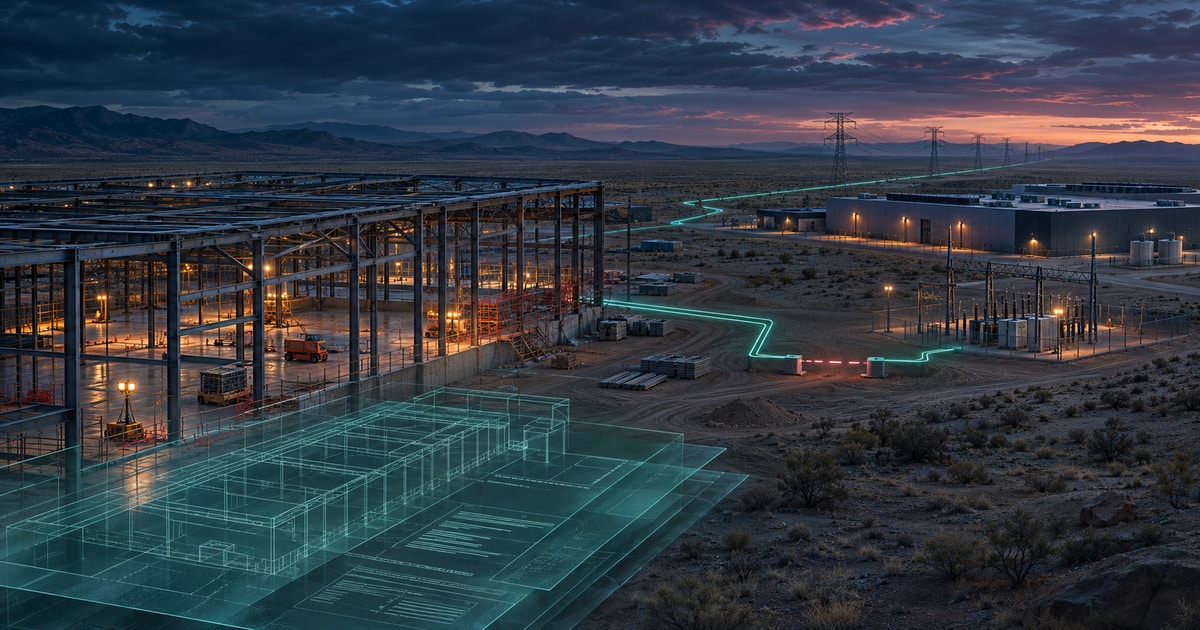
The opening image is a conceptual illustration generated for l0g, not a photograph of the construction site. The diagrams explain mechanisms and statistical coverage; they are not a comprehensive map of Jupiter. l0g text and diagrams: CC BY 4.0. Cited documents retain their own rights.
This analysis is not investment advice.
// cite this analysis
l0g, “Jupiter: following AI’s creditors”, l0g.fr, published November 17, 2026, updated November 17, 2026, https://l0g.fr/en/analysis/jupiter-hsbc-european-banks-ai-financing/
$ cd ../analysis