// analysis
Trafigura’s nickel fraud and the limits of paper collateral
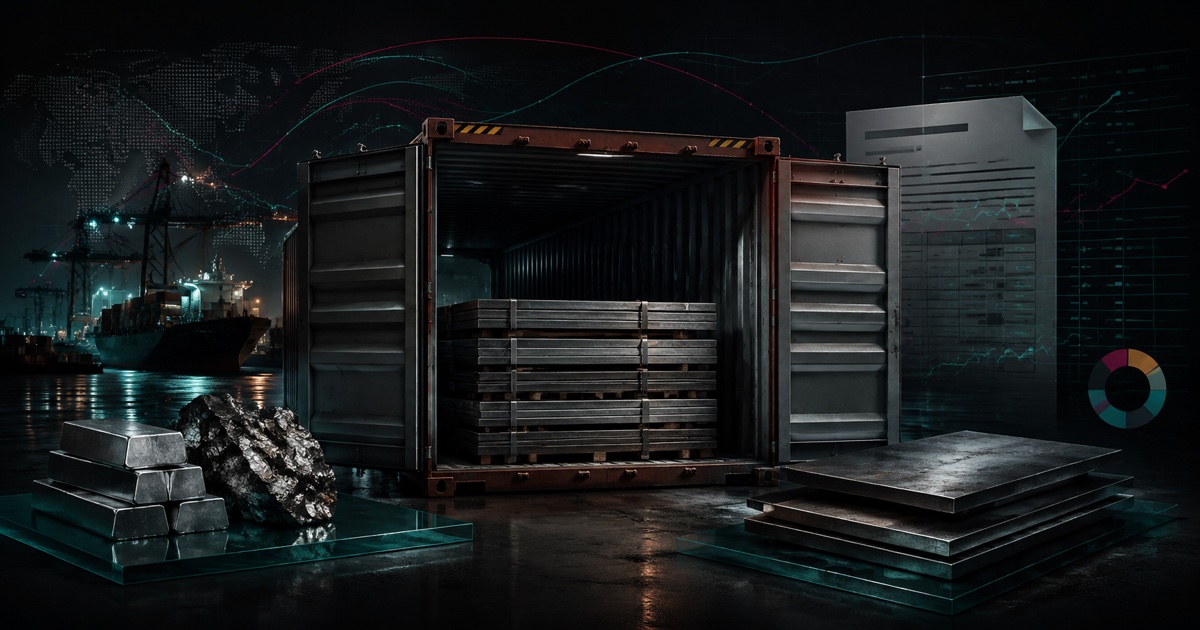
The Trafigura–Gupta case exposes a mismatch between cargo and credit. An investigation into Citi’s exit, documentary checks and the limits of recovery.
Banking on Oil · Part 6
On 9 November 2022, Trafigura arranged for a sample of containers to be opened in Rotterdam. The shipping documents described nickel cathodes. The inspection found what appeared to be carbon steel. There was an unusual detail: Trafigura had already sold the cargo back to a company in Prateek Gupta’s network. The cargo had already been resold before its contents were checked. The inspection went ahead anyway and exposed the gap between an onward sale and verification of the goods actually being shipped. [1]
On 30 January 2026, London’s High Court found that Gupta had organised a large-scale fraud through the corporate defendants. Mr Justice Saini rejected his account of a secret scheme devised by Trafigura employees, clearing Sokratis Oikonomou and Harshdeep Bhatia of the wrongdoing alleged against them. This was a civil judgment, not a British criminal conviction, and it did not mean Trafigura had collected the money it was entitled to recover. [2]
The financing explains why the difference is so important. Trafigura was paying to hold cargo between two sales, then refinancing that position with Citi. Its protection depended on being able to sell valuable metal if the expected buyer failed to return. The documents described that protection. They could not make it real.
Part 1 followed the financing of a cargo, Part 2 mapped the banks behind Trafigura, Part 3 reconstructed Chad’s oil-backed debt to Glencore, Part 4 entered the making of a Platts benchmark and Part 5 examined Vitol’s physical assets. This sixth part returns to Trafigura to separate three things that are easily blurred: the documents, the metal and the credit.
A trader provides the time between two sales
The relationship began around 2014 or 2015 with straightforward transactions: Trafigura bought nickel and resold it to its own customers. From about 2018, a different arrangement became more prominent. Under transit financing, Trafigura bought a shipment from a Gupta-linked company, usually expecting another sale back into that network as the vessel approached its discharge port. The original seller and the eventual buyer were not necessarily the same legal entity. The judgment uses “UIL” as shorthand for these separate companies. [3]
Trafigura held title for an interval and earned a return related to the number of days it financed the cargo. Settlement also reconciled the provisional purchase price with the final price determined under the contract. The judgment describes the commercial return as equivalent to interest. That is not the same as the trader’s net profit after its own financing and operating costs. [3]
Initially, Trafigura typically paid about 90% of a provisional price linked to London Metal Exchange nickel. The remaining balance fell due when the final price was established. Retaining roughly 10% provided some protection against price movements; it was not a 10% profit margin. In a simplified, constant-price example, paying 90 for an asset worth 100 leaves a cushion of 10. That cushion offers little comfort if the asset is worth only a small fraction of the amount advanced. [3]
The specification mattered. The contracts required nickel with a minimum purity of 99.8%, of an LME-approved brand. Steel that happened to contain nickel was not an acceptable substitute. The description identified the product that could be resold, not merely an element somewhere in its composition. [4]
Citi’s contractual backstop
When Trafigura first purchased the metal, the Gupta companies were not bound to buy it back. Repurchase was expected, but it required a subsequent agreement. The trader could accept that arrangement because it believed it held a readily saleable commodity. If the original supplier did not return, the nickel could go to another customer or into the LME system. The judge accepted the commercial logic in principle, provided the cargo was what it purported to be. [3]
Trafigura’s deal with Citi was different. Having bought the shipment, it would ask the bank whether it wanted to refinance it. If Citi agreed, title passed to the bank along with the original bills of lading: the shipping documents used in these transactions to transfer rights over the goods. Trafigura committed to taking the position back at maturity. Financing generally ran for about a month and could be rolled over. [3]
This sale-and-repurchase arrangement is a repo. Citi had Trafigura’s commitment. Trafigura, in turn, expected the Gupta network to repurchase the cargo or relied on being able to sell it elsewhere. A supplier’s failure to buy back did not release Trafigura from its undertaking to the bank.
By 2022, the Citi facility had a ceiling of US$850 million. The judgment expressly says it financed several products and businesses, not nickel alone. The ceiling was not the amount lent to Gupta, the amount outstanding on the disputed cargoes, or a loss suffered by Citi. Adding it to Trafigura’s losses would double up different concepts rather than measure the scale of the fraud. [3]
The reassurance of repeat business
An internal email dated 24 September 2020 put the financing team’s concern plainly: “we have become the bank of this company”. The message questioned the customer’s dependence on Trafigura, the length of voyages and the volume being financed. Its inclusion in the judgment shows that the financial substance of the relationship was being discussed within the firm. [5]
It would be wrong to turn the email into an admission that employees knew about the fraud. The judge rejected that inference. Long journeys, delays and the lack of inspections between sale and repurchase were also features of earlier trading that both sides accepted had involved genuine nickel. Unusual commercial behaviour did not, by itself, distinguish the honest transactions from the later ones. [5]
Repeated settlement nevertheless created an obvious source of reassurance: the customer came back, and the trades closed. But that experience tested payment behaviour. For a container resold unopened, it did not independently establish what was inside. The November 2022 inspection, involving cargo that had already been bought back, illustrates the gap particularly well.
The bank withdrew before the metal was checked
During the second half of 2022, buy-backs became increasingly difficult. The record describes late payments, some failures to pay and cargoes stranded at ports. In October, Citi reviewed the facility and pressed for inspections. By 24 October, Trafigura’s internal correspondence was explicitly discussing the possibility that it would have to take positions back if the bank refused to roll its financing. [6]
On 27 October 2022, Citi said it would stop financing the UIL-related trades immediately. After 4 November, once the bank’s positions had matured, Trafigura funded the outstanding buy-back business itself. The inspection that revealed the first physical discrepancy took place on 9 November. The sequence is decisive: the bank’s exit preceded the discovery described in the judgment. [6]
A short-term lender can decline to renew before a fraud finding is established. Trafigura was left holding the cargo exposure and had to finance it without that facility. The difference between the two repurchase arrangements had become a cash requirement.
Citi’s withdrawal did not stop the inspections. The judge found that the employees concerned continued to pursue them, conduct inconsistent with the suggestion that they were protecting a fraudulent arrangement. The discovery then developed over time. On 22 December 2022, eight further containers were inspected in Rotterdam and found to contain steel rather than the promised nickel. A discrepancy identified in November should not be confused with immediate knowledge of the entire exposure. [1]
The limits of certificates of analysis
The purchase contracts required several documents before payment, including a certificate of analysis or quality. Yet payments were made without those certificates. The judgment records this and describes the commercial manager’s surprise on learning that the protocol he expected had not been followed. There was a genuine gap between the contractual requirements and their implementation. [7]
But the next part of the judge’s analysis is just as important. When asked for certificates, the sellers could produce apparently compliant documents describing pure nickel even though the cargo contained stainless steel. The judgment identifies a specific example. Insisting on the missing document could therefore have completed the administrative file without exposing the substitution. The document still had to be matched to the contents of the particular shipment. [7]
The choice of inspector presented a related problem. In late October, the Gupta network identified cargoes it would allow to be checked, but by an agency of its own choosing. It then objected to moving those cargoes for inspection once Trafigura insisted on using its own nominated inspectors. The judge concluded that the plan had been to obtain a false report from a compliant inspector. Merely adding an inspection certificate to the file would not have solved that problem either. [1]
The practical questions follow from those findings: who selects the sample, who appoints the inspector, and how is the finding tied to the asset being financed? Contractual rights matter, but exercising them can mean moving a container, interrupting a shipment and inconveniencing a customer. In this case, it was common ground that removing a container for inspection and then returning it could take one to two weeks. [1]
An inventory of something else
The proceedings concerned 107 trades, divided into several categories. The largest group comprised 91 cargoes to which Trafigura held title at the end of 2022. The court found that 77 contained stainless-steel plates or sheets, 11 contained iron briquettes and three contained aluminium ingots. These are counts of trades and cargoes, not tonnes or containers. A single cargo could occupy several containers. [8]
With one limited exception, the materials in that main group were sold for a combined sum just below US$10 million, or about 2% of their original purchase price, according to the judgment. That comparison concerns the proceeds from selling those goods. It is not an overall recovery rate covering litigation, other assets, insurance and every available claim. [8]
Two further trades raised a different issue. Rival sets of bills of lading circulated for cargoes described as nickel. The carrier, OOCL, concluded that the documents delivered to Trafigura were invalid and that Hyphen held the genuine originals. The judge found that Trafigura had not obtained the title for which it paid. He attributed this variant of the fraud to Gupta and UIL Malaysia, rather than extending responsibility for it to every defendant. [9]
A laboratory test cannot settle that question. Metal may exist without belonging to the party that believes it bought it. Verifying the substance of a cargo and verifying the rights over it are separate tasks. Nor does an ocean bill describing LME-grade nickel establish that its holder has an LME warrant, the title issued for metal placed in the exchange’s approved warehouse system. [4]
A charge, a judgment and a collection are different amounts
On 9 February 2023, Trafigura announced a US$577 million charge, then described as its estimate of maximum loss exposure. Its annual report, published on 8 December 2023, recorded a US$578 million write-off for the financial year ended 30 September 2023. Note 6 of the consolidated accounts says the charge primarily related to inventory and was predominantly included in materials, transportation and storage costs. Recognising it did not mean that another payment of that amount had been made on the accounting date. [10] [11]
The 30 January 2026 judgment granted proprietary relief over roughly US$500 million, together with substantial damages. Some claims and the tracing of money into other assets were reserved for a second phase. The judicial amounts and the accounting charge cover different things; they cannot be added together as a measure of the fraud. [2]
After the hearing on 26 February 2026, Trafigura put Gupta’s liability at about US$700 million, plus legal costs, according to Reuters. The High Court refused permission to appeal, although Gupta could still seek permission directly from the Court of Appeal at that point. The US$700 million total is the company’s figure; the report does not provide a complete reconciliation of its components. [12]
Collection is another stage. A freezing order aims to stop assets being dissipated; it does not automatically transfer their value to the claimant. On 22 September 2025, the Dubai International Financial Centre Court of Appeal continued freezing measures in support of the English proceedings. Those measures could protect an eventual recovery, but did not establish that recovery had occurred. [13]
There is a separate criminal history. Global Trade Review reported on 25 August 2026 that a Dubai forgery conviction in 2024 had been overturned on appeal, with Gupta’s acquittal upheld in 2025. Its account relies on DIFC filings we have not inspected directly. That local criminal outcome should not be described as overturning the English civil judgment. Its effect on enforcement is contested. [14]
The documents reviewed do not establish cumulative net recoveries as of 7 September 2026. We also found no public decision establishing the outcome of the DIFC hearing announced for 31 August. The London judgment cannot be presented as the end of the recovery process.
The fallback depended on real nickel
The evidence does not show that transit financing is inherently fraudulent. The court describes an earlier period in which the same broad arrangement involved genuine nickel. It also accepts the logic of reselling a liquid commodity if the original supplier does not repurchase it. Providing funds while goods move is a real commercial service. [3] [5]
The vulnerability was a fallback whose value remained untested. As repurchases continued, settlement could reassure the financier without verifying the inventory. Once bank funding stopped, the trader had to carry that inventory and establish what it could actually sell. In this case, rights over cargoes described as nickel left Trafigura with much less valuable materials and claims against their sellers.
Genuine nickel could have been sold to someone else. That was the protection Trafigura thought it had.
Sources and documentary references
The judgment of 30 January 2026 is the central source. References below identify the relevant passages; they are not fourteen independent sources. Research cut-off: 7 September 2026.
- High Court : the inspections that exposed the fraud
30 January 2026. Paragraphs 151–160 and 193: funding withdrawal, inspector selection, the 9 November and 22 December 2022 inspections. The first sample came from cargo already bought back.
- High Court : Trafigura Pte Ltd & Anor v Prateek Gupta & Ors, [2026] EWHC 159 (Comm)
30 January 2026. Paragraphs 1–11 and 363–364: civil claim, liability, proprietary relief, second phase, and rejection of allegations against former employees. Official full judgment.
- High Court : transit finance and the Citi commitment
Paragraphs 17–21, 61–69 and 201–207. Initially non-obligated UIL repurchase, Trafigura’s undertaking to Citi, provisional payment around 90%. The US$850m ceiling covers several products and businesses.
- LME : approved brands and warehouse entry
Institutional page accessed 7 September 2026; no publication date shown. Read with judgment paragraphs 1 and 201 for the 99.8% minimum and contractual specification. An ocean bill of lading and an LME warrant are different documents. Full judgment.
- High Court : trading history and the 2020 concerns
Paragraphs 70–72 and 93–102. The 24 September 2020 email is reproduced at paragraph 93. The judge rejects the inference of collusion; the same features existed during the acknowledged honest period.
- High Court : Citi’s autumn 2022 maturities
Paragraphs 126–128 and 145–152, especially 151. Withdrawal on 27 October; after 4 November Trafigura funds the relevant business itself. Financing amounts mentioned in correspondence are not treated as bank losses.
- High Court : missing and misleading certificates of analysis
Paragraphs 129–137. Payments without contractually required certificates and apparently compliant but false certificates. The judgment does not infer employee collusion from these facts.
- High Court : cargo contents and resale proceeds
Paragraph 212(1): 77 + 11 + 3 = 91 main trades, within the 107 disputed trades. Paragraph 4: main-group materials, with one limited exception, sold for just under US$10m, about 2% of original cost. Neither volume shares nor an overall recovery rate.
- High Court : the two OOCL trades
Paragraphs 353–362. Rival bills of lading and title not obtained by Trafigura; liability of Gupta and UIL Malaysia. This part of the judgment does not extend liability to every defendant.
- Trafigura : Statement re Legal Action
Statement dated 9 February 2023 retained below an update of 30 January 2026. US$577m is the then-announced estimate of maximum loss exposure. Corporate source and party to the litigation.
- Trafigura : 2023 Annual Report, consolidated accounts
Published 8 December 2023. Year from 1 October 2022 to 30 September 2023. Note 6, printed p. 69 / PDF page 71: US$578m charge, primarily inventory; also p. 7. Printed page 69 visually checked. Audited IFRS accounts.
- Reuters : London hearing, 26 February 2026
26 February 2026, 15:45 on the London South East republication. High Court refusal of permission, with a direct Court of Appeal application still possible at that point. Roughly US$700m attributed to Trafigura’s spokesperson. Detailed order not inspected.
- DIFC Courts : Trafigura v Gupta, [2025] DIFC CA 001
22 September 2025. Order point 3 and paragraphs 9–26: continued freezing measures supporting English proceedings. Addresses asset preservation, not money collected by Trafigura.
- Global Trade Review : the separate Dubai criminal proceedings
Jacob Atkins, 25 August 2026. Reporting based on translated filings; original criminal decisions and underlying filings not independently inspected by l0g. The report announces a 31 August hearing; its outcome was not confirmed in public sources found by 7 September.
This analysis is not investment advice.
// cite this analysis
l0g, “Trafigura’s nickel fraud and the limits of paper collateral”, l0g.fr, published September 07, 2026, updated September 07, 2026, https://l0g.fr/en/analysis/banking-on-oil-6-trafigura-nickel-fraud/
$ cd ../analysis