// analysis
The diesel America wants to keep
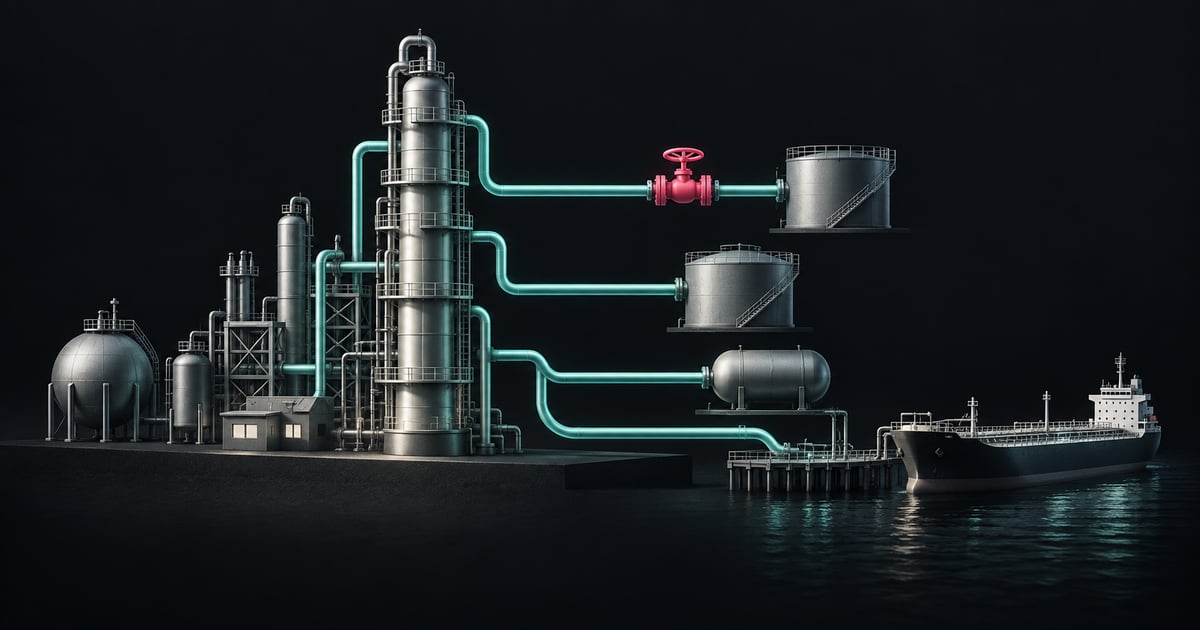
Washington is weighing diesel export restraints. EIA prices, refinery output and European supply explain the possible effects on fuel costs.
US on-highway diesel averaged $6.529 per US gallon on September 21, 2026, including taxes, up from $5.967 on September 7. That is a 9.4% increase, calculated from the US Energy Information Administration’s surveys. For a business that has to keep trucks running, the appeal of keeping more fuel at home is easy to understand. Why send it overseas when domestic customers are paying so much?
Donald Trump has backed restrictions on exports. A blanket 90-day ban, however, has not been established by the sources reviewed as of September 26. The White House denied that reported plan on September 23. The following day, Reuters described discussions between Energy Secretary Chris Wright and refiners about voluntary reductions, with neither the requested volume nor monitoring arrangements publicly specified. Reuters, September 23; September 24.
On September 25, Bloomberg reported that several options remained under discussion, including tax measures and changes affecting off-road diesel. According to people familiar with the talks cited by the agency, a decision was not imminent. The scope and timing of any eventual measure remained unsettled.
One possible consequence appears counterintuitive: keeping diesel in America could help some domestic buyers, then make gasoline more expensive. Wright raised that concern on September 23. Understanding how both things could happen requires following the fuel through a refinery, rather than stopping at the export terminal.
Why foreign buyers matter to an American fuel bill
US refineries supply customers at home and abroad. Over the four weeks ending September 18, gross distillate exports averaged 1.559 million barrels per day, compared with 5.215 million for net production of those products. The ratio was approximately 30%, according to EIA estimates. Distillates are a broader category than road diesel alone, including heating oil. The comparison shows how important the export outlet is. It does not identify a quantity that could be redirected without affecting anything else.
Consider a supplier choosing between a domestic customer and a buyer overseas. What matters is not simply the foreign offer, but what remains after freight and other costs. A more attractive return abroad gives the seller an alternative when negotiating at home. The American buyer is dealing with an American company, but is still competing with other customers for its fuel.
An export restriction can weaken that competition and push the local price lower. That is the intended effect. It would be wrong to dismiss it merely because oil trades internationally: a trade barrier can create a price gap between markets. The EIA’s explanation of petroleum-product trade describes how shipments connect regional prices. Restricting those shipments can loosen that connection.
The present squeeze is not solely a question of where American barrels go. In its September 18 analysis, the EIA linked higher diesel prices to reduced global production of refined products, including in Russia, China and the Middle East. Buyers have been looking for replacement supply. US producers can therefore face strong foreign demand even while their domestic customers consider the price unaffordable.
A refinery makes several fuels at once
Crude oil is a mixture. A refinery heats it, separates it into different fractions, and processes and treats those streams. The result includes gasoline, diesel and jet fuel, alongside other fuels and industrial feedstocks. The EIA describes the process here. Buying another barrel of crude is not the same as ordering another barrel of whichever finished fuel is in short supply.
Refiners have some room to change their product mix. Equipment and operating choices allow them to favor certain outputs. But components are not freely interchangeable, and finished fuels must meet their specifications. The EIA explains how this limited flexibility allows gasoline and diesel prices to diverge. Expensive diesel does not instantly become plentiful diesel.
That connection also explains how a diesel-only restriction could affect other fuels. A refinery that can no longer sell part of its output may eventually process less crude. With an unchanged product mix, it then makes less gasoline and jet fuel too, even if neither is subject to an export restriction. This would be a consequence of joint production, not a legal extension of the ban to those other fuels.
The decisive question is whether refiners actually cut throughput, meaning the amount of crude they process. A limited restriction need not cause that response. Additional domestic sales, storage or changes to the product mix might absorb the retained volumes. Gasoline becomes exposed when those alternatives prove insufficient and other suppliers fail to replace the lost output.
Extra fuel today, a storage decision tomorrow
Take a wholly hypothetical plant producing 100 units of diesel each day. It sells 70 domestically and exports 30. A restriction reduces its exports to 10. If production and domestic sales remain unchanged, the plant adds 20 units a day to inventory.
Initially, that additional stock can be useful. It provides a buffer and gives the seller a reason to seek more customers at home, perhaps at a lower price. If it finds those customers, or the restriction ends soon enough, the plant may continue operating at the same rate. Under those circumstances, the intended domestic benefit is perfectly possible.
Now suppose domestic buyers do not purchase those extra 20 units, even after a price reduction. Available storage is finite. If holding more inventory becomes too expensive or physically impractical, maintaining the same output is no longer a solution. Depending on the returns across its product sales, the plant might reduce operations before its tanks are full.
The amount stopped at the border need not equal the amount ultimately added to domestic supply. In this example, diesel production could fall from 100 to 80 while exports remain at 10 and domestic sales stay at 70. A 20-unit export reduction has been offset by a 20-unit production cut. This is an illustration of one possible adjustment, not an estimate of what American refiners would do.
Storage shifts a sale through time; it cannot accommodate a daily surplus indefinitely. Its economics also depend on expected prices. Holding fuel costs money, and selling it later offers an uncertain return. The EIA explains this relationship between inventories, seasonal demand and prices. How long a restriction lasts is therefore part of the mechanism, not a minor detail to be settled afterward.
Regional markets depend on transport links
National inventories give supporters of stock-building a tangible concern to point to. The EIA counted 107.4 million barrels of distillates on September 18, approximately 12% below the five-year seasonal average. That indicates reduced stocks. It does not mean every depot is equally depleted, or that a fixed number of days remains before America runs out of fuel. Production, deliveries and consumption continue throughout the period.
Geography changes the picture. The EIA says about half of US diesel production is on the Gulf Coast. Regions have different refinery capacity and supply connections, and transport constraints can sustain local price differences. Keeping a cargo near its departure terminal does not guarantee that it can promptly reach a customer elsewhere in the country.
Low national stocks are therefore compatible with a risk of local storage congestion after export outlets close. The first describes the starting position. The second concerns particular locations under a sufficiently large or prolonged change in flows. Neither observation cancels the other; transport capacity is what connects them.
To assess voluntary export reductions, it would be necessary to trace where the retained fuel actually goes. Delivering diesel into a supply-constrained region is different from storing a cargo where it would otherwise have been loaded onto a ship. Fuel has to be both available and deliverable to meet a customer’s need.
The refiners’ warning needs testing
The American Petroleum Institute opposes export restrictions, citing risks to refinery production among other concerns. It represents the oil and gas industry, whose members have a commercial interest in retaining foreign markets. That does not invalidate the industrial argument. It does mean the association’s assessment should not be treated as a disinterested verdict on the overall outcome.
Lower prices can initially transfer income from producers to buyers without making production unprofitable. Conversely, strong profits before a restriction do not demonstrate that a plant could absorb any reduction in its sales. Distinguishing between those possibilities requires information about the affected operations’ costs and outlets, not simply a company’s consolidated earnings.
The word “margin” also needs care. The difference between a wholesale fuel price and the price of crude provides an indicator of refining value, as the EIA explains. That price spread is not a company’s net profit: it does not deduct all its costs. Nor does it establish, on its own, the point at which a particular refinery would reduce production.
In its September 24 scenario, Wood Mackenzie envisages inventories building, crude processing falling and gasoline supply coming under pressure. This is a private consultancy’s analysis of a blanket ban. Its public summary does not provide enough information to audit the full model. In particular, its findings cannot simply be applied to an unspecified voluntary reduction.
There is also a practical reason not to assume a rigid output mix. On September 4, the EIA reported that US refiners had shifted yields toward distillates and jet fuel in response to their higher relative value. Some adjustments could move the other way if relative prices changed. That would not remove every constraint, but it could soften the impact on other fuels.
How the risk could reach Europe’s pumps
Foreign buyers would face a more immediate task: replacing the cargoes no longer available to them. On September 24, the European Commission expressed concern and said contacts with Washington were under way. Its response concerned the risk of restrictions, not confirmation that a US embargo had taken effect.
Europe would be seeking replacements in an already strained market. In a September 21 report, S&P Global described weakened Middle Eastern diesel deliveries and high European prices. It also noted an incentive for European refiners to favor diesel over jet fuel. That is one way supply can adjust, but it can move pressure from one product to another rather than eliminate it.
Our analysis of the oil routes through Yanbu examines the delivery constraints also affecting European supplies.
France’s exposure would extend beyond its direct purchases from the United States. Suppose an importer normally supplied by an American refinery seeks a replacement elsewhere. It then competes with the customers already buying from that alternative supplier. The resulting price can reach a French buyer that never imported US diesel in the first place. This is an implication of the way petroleum trade links markets, not a claim that every French cargo comes from America.
France also has its own refining industry. In its preliminary energy balance for 2025, the French statistical service SDES reported a 24.5% reduction in net imports of refined petroleum products as domestic refining recovered. That matters: France is not simply an importer with no production of its own. The figure nevertheless covers all refined petroleum products in 2025. It measures neither purchases of American diesel alone nor available supply in September 2026.
A percentage increase in the purchase price of diesel would not translate into the same percentage increase on a French filling station’s sign. The final price also includes transport, distribution and taxation, as the French economy ministry explains. A wholesale-price assumption is not a complete pump-price forecast. Without a specified volume withdrawn from trade, a response from other suppliers and assumptions about the remaining price components, a precise estimate of extra cents per liter would be spurious.
The missing number is how much fuel would stay
“Voluntary” tells us little about the number of cargoes that would change destination. A reduction measured against an exceptionally strong export month might partly reflect a decline that was already expected. A postponed shipment might leave several weeks later. To measure the effect of an agreement, the relevant comparison is with what would probably have happened without it, not merely with the announced commitment.
Reuters’ September 24 reporting did not establish the size of the requested cuts or how compliance would be monitored. Voluntary cooperation might mean a small adjustment or a substantial reduction in exports. Neither outcome should be assumed.
If modest volumes were retained briefly enough for buyers and storage to absorb them, domestic relief would be compatible with unchanged refinery activity. If restrictions were large or long-lasting enough to alter processing decisions substantially, risks would spread to gasoline and jet-fuel supply. Changes in prices, operating choices and suppliers could cushion the effects in between. These are conditional paths, not forecasts with assigned probabilities.
The practical test would be whether US customers receive cheaper, more accessible diesel while refineries continue supplying other fuels. Prices, deliveries and production volumes would need to be tracked together. European buyers would face a related but different question: what would it cost to replace the deliveries they had lost?
Keeping a gallon at home can help the person who buys it. A lasting benefit would also depend on the ability to keep producing and delivering fuel. The result would emerge there, well after the announcement about what may cross the border.
Sources
- EIA, 2026-09-23. Weekly Petroleum Status Report, Table 14: Retail Motor Gasoline and On-Highway Diesel Fuel Prices.
- Reuters, syndicated by GV Wire, 2026-09-23. White House Denies Report US Is Considering a Diesel Export Ban.
- Reuters, syndicated by AOL, 2026-09-24. US energy secretary seeks refiners’ help amid narrow options to curb diesel price.
- Reuters, syndicated by AOL, 2026-09-23. US Energy Secretary Wright says diesel export ban won’t work.
- EIA, 2026-09-18. What goes into diesel prices?.
- EIA, 2026-09-23. Weekly Petroleum Status Report, Table 9: U.S. and PAD District Weekly Estimates.
- EIA, 2026-09-23. Weekly Petroleum Status Report, Table 1: U.S. Petroleum Balance Sheet.
- EIA, 2026-09-23. Weekly Petroleum Status Report: Summary.
- EIA, accessed September 26, 2026. Refining crude oil: the refining process.
- EIA, accessed September 26, 2026. What drives petroleum product prices: Production.
- EIA, accessed September 26, 2026. Diesel fuel explained: Factors affecting diesel prices.
- EIA, accessed September 26, 2026. What drives petroleum product prices: Trade.
- EIA, accessed September 26, 2026. What drives crude oil prices: Balance.
- American Petroleum Institute, 2026-09-22. API Statement on Potential U.S. Diesel Export Ban.
- Wood Mackenzie, 2026-09-24. A US diesel export ban would trigger global stock drawdowns, cut US refinery utilisation and risk driving gasoline prices higher.
- S&P Global Energy, 2026-09-21. Middle East diesel exports to Europe head for six-year low in September.
- SDES, 2026-04-22. Bilan énergétique de la France en 2025: données provisoires.
- Ministère de l’Économie, Bercy infos, 2026-03-09. Où trouver le prix des carburants près de chez soi ?.
- EIA, 2026-09-04. Elevated crack spreads and crude oil prices contribute to higher prices at the pump.
- Reuters, syndicated by AOL, 2026-09-24. EU in high-level contact with US over reported plans to ban diesel exports, spokesperson says.
- Bloomberg / ArcaMax, 2026-09-25. White House mulls range of options to lower diesel costs.
Method and limitations
Research cutoff: September 26, 2026. US retail prices are nominal, include taxes and are expressed per US gallon. Flow statistics are daily averages over the four weeks ending September 18; inventories are measured on that date. The EIA category “distillate fuel oil” extends beyond road diesel. Weekly exports are estimates and may be revised.
The exports-to-production ratio uses the same reporting period and product category. Exports are gross; the denominator is net production by refiners and blenders, not production after deducting exports. The ratio does not establish the origin of each cargo and is not a complete balance accounting for imports and stock changes.
The 100-unit examples are hypothetical. No independent pump-price simulation, legal assessment of a restriction or plant-by-plant storage study was conducted. API’s position and Wood Mackenzie’s analysis are attributed to their authors. Syndicated news reports are identified as republications, not additional independent corroboration.
The EIA on-highway price does not describe tax-exempt agricultural fuel. The EIA weekly summary cited for the five-year comparison is a rolling URL, consulted on September 26 for the week ending September 18. Calculations from EIA tables 14 and 9, before rounding: (6.529 / 5.967 − 1) × 100 = 9.418%; 1.559 / 5.215 × 100 = 29.895%. No interviews were conducted by l0g for this article.
This analysis is not investment advice.
// cite this analysis
l0g, “The diesel America wants to keep”, l0g.fr, published September 26, 2026, updated September 26, 2026, https://l0g.fr/en/analysis/us-diesel-export-restrictions-gasoline-prices/
$ cd ../analysis