English edition ·
// l0g publication · debt collection & AI
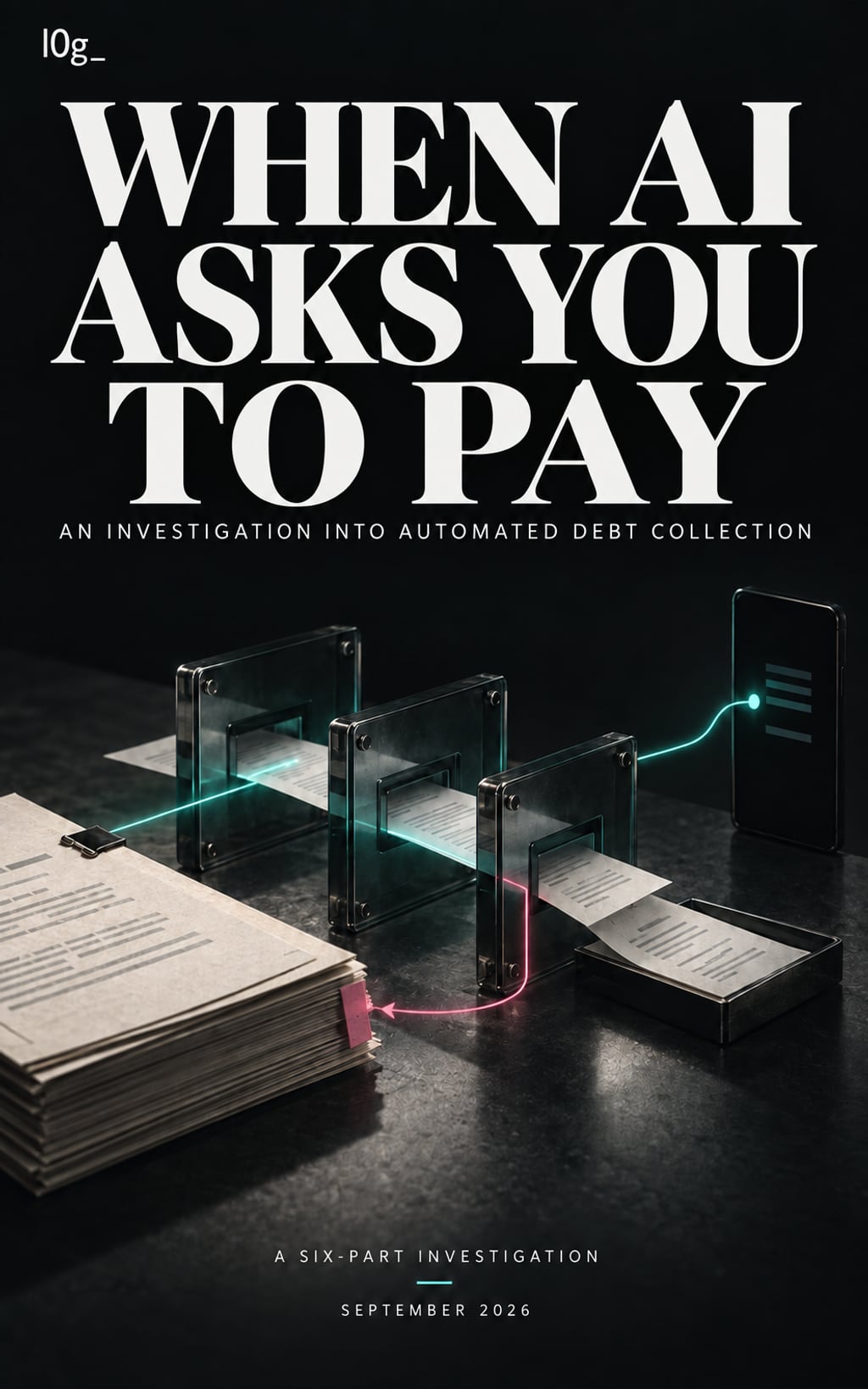
When AI asks you to pay
An investigation into automated debt collection.
An amount, a link, a payment reminder. Who decided to contact you? What happens when you dispute the debt? Six investigations follow the record behind automated collection in France, from performance claims to the means of getting a decision corrected.
- 6 complete investigations
- 9 diagrams
- Original introduction and conclusion
EPUB 3 · offline reading · CC BY 4.0

01 / introduction
Before the message, there is a record
A payment reminder arrives on a phone. It contains an amount, a link and perhaps a repayment offer. Understanding how it was produced means looking further back: identifying the creditor and the company acting on its behalf, examining the information held about the account, and tracing the choices made before the message was sent. Artificial intelligence may enter at several points. The conversation on screen reveals only part of that process.
This investigation begins before the reminder. The first chapter separates the actors and their functions: owning a claim, organising collection, generating a score and drafting a reply. Each carries different powers. A single interface can bring them together while leaving the person contacted uncertain about who does what. The privacy notices and contractual documents examined here provide a starting point for unravelling those roles.
Chapter two turns to the results companies advertise. Faster collections, lower processing costs and better customer ratings are different measures. Comparing them requires attention to the people included, the period covered and the method used. The next chapter follows another kind of information: a person describing a difficulty. How is that disclosure interpreted, who receives it, and what support can actually follow?
Correction comes next. An amount may be disputed, a payment reported or an agreement revised. The change then needs to reach the tools that continue to act on the account. Chapter four follows that process and examines a US case documented by a regulator, keeping its jurisdiction and circumstances explicit. Chapter five moves upstream to contracts, data recipients and service providers. The allocation of tasks matters when several organisations must respond to the same problem.
The final chapter brings together ways of examining a record: obtaining personal data, asking about a calculated profile, seeking an explanation where the law provides for one, and distinguishing different procedures and their deadlines. Payment reminders do not all fall under the same legal rules. The task is to identify the particular operation at issue and the organisation able to address it.
The book is a documentary investigation into the collection of consumer debts in France. Laws, decisions, studies and commercial statements are attributed in each chapter. Material from other countries retains its original context. We have not audited a live collection system or reconstructed the handling of individual accounts. That boundary matters whenever the inquiry moves from an advertised capability to its actual use.
Bringing the six parts together makes it possible to follow one question through the whole process: how does information about a person turn into an action, and how can that person change what happens next? This English edition draws on the six English articles published on 24 and 25 September 2026. Their sources and nine diagrams remain attached to the text. The contents and links between chapters support both continuous reading and a return to a particular issue.
02 / six stages
From the first message to remedies
Each chapter is also available online. The EPUB brings them together in a continuous reading sequence, with their sources and illustrations.
 01
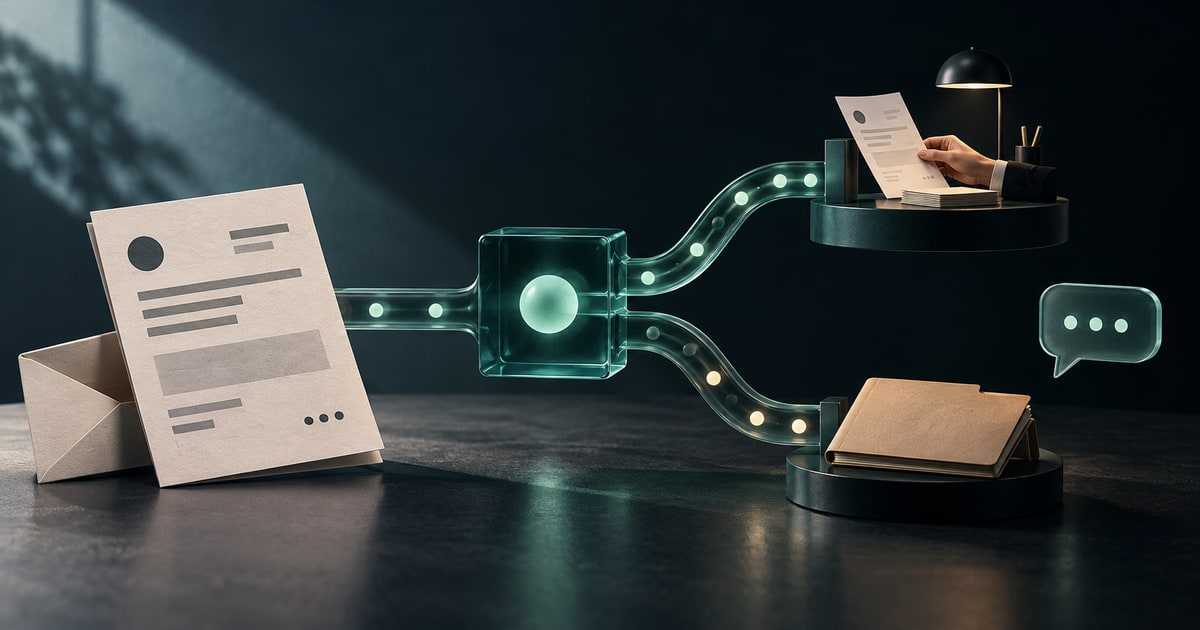
01Who decides the next step?
Creditor, collector, score and chatbot: identifying the powers behind a reminder.
 02
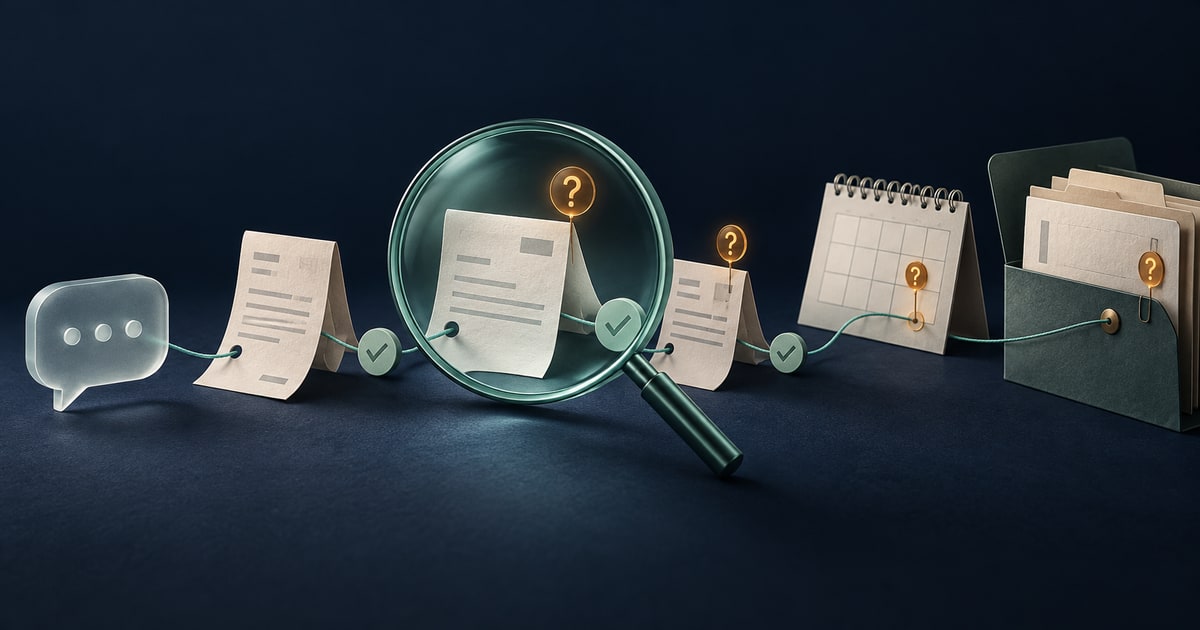
02Examining the performance claims
Collections, costs and satisfaction: finding the comparison and the follow-up period.
 03
03What happens when you ask for help
From recognising a difficulty to providing support and protecting personal disclosures.
 04
04Correcting the record all the way through
Disputes, agreements and payment tools: getting the correction into the operations.
 05
05Contracts and accountability
Data recipients, reuse and service continuity across a chain of providers.
 06
06Data rights and remedies
Accessing a profile, seeking an explanation and keeping procedures and deadlines distinct.
03 / inside the book
Following a correction, separating deadlines


04 / conclusion
A correction has to reach the action
The investigation returns to a practical requirement: being able to connect a message to the information and decisions that produced it. A creditor holds a claim for payment; a collection company organises the process; other providers may handle data or supply software. Understanding those roles helps locate the documents and identify who has the authority to change the record.
Performance claims need the same precision. A payment received sooner, a lower cost and a better satisfaction rating describe different aspects of a service. Their meaning depends on who enters the measurement, the comparison used and the length of follow-up. Assessing how an unpaid debt is resolved also calls for examining what happens to agreements and what difficulties arise after the first exchange. The commercial figures discussed in the book retain their attribution and scope.
An extract from the original conclusion. Read the full text in the book.
05 / take the investigation with you
Read it through, with the sources
The six English articles published on 24 and 25 September 2026 are collected with their notes, attributions and explicitly hypothetical examples. Text reflows to fit the screen. The contents link to chapters and sections; links between chapters work offline.
All nine diagrams and the illustrations are embedded in the file. External documents and the glossary require an internet connection. Image enlargement depends on the reading app.
The book is free, with no registration required, under the Creative Commons Attribution 4.0 International licence. It contains no scripts, remote fonts or tracking tools.
The cover, panorama and chapter illustrations were created with AI assistance. They depict mechanisms conceptually and do not represent a real personal record or a supplier’s architecture.
File information
- Format
- EPUB 3 · English · 706 KB
- Edition
- 25 September 2026
- SHA-256
dc09ac7cb5a41ba91147ec0670e76e97ffe8b88d9248209ac4661a09fabdf4ed